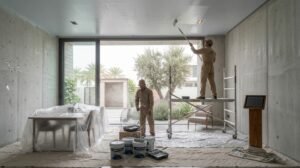
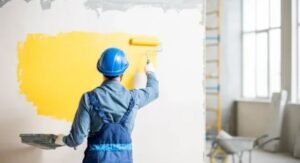
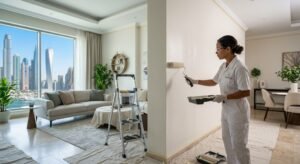
Fresh, clean feeling rooms are possible with a fresh coat of paint. You don’t have to change your furniture, nor do you have to spend a lot of money to do major renovations. However, even if you put a fresh coat of paint on the walls, you may still not get the results you want. Sometimes the color will look different on the wall, the finish will appear unevenly applied, or the paint will start to peel off after a few weeks.
In Dubai, there may be more of an impact on these issues due to the fact that homes must contend with dust, strong sunlight, humidity and air conditioning. However, the positive side of this is that with proper preparation, many painting problems can be avoided. There are a few things you need to consider before you begin to paint your home. Whether you live in a villa or an apartment, professional apartment painting services Dubai can help achieve a smooth finish with proper surface preparation and suitable paint.
Painting Walls Without Proper Preparation
When it comes to painting after you’ve moved your furniture out of the room, one of the worst things you could do would be to immediately start painting. While your walls may appear clean from across the room, it’s very likely that there are some dust, grease, small cracks, and/or loose paint on the surface of those walls. Proper surface preparation is essential for a smooth, even finish, especially when choosing professional floor painting services Dubai to improve the appearance and durability of your floors.
These issues could result in poor adhesion of the new coat of paint. You might also find rough areas or other imperfections once the paint is completely dry.
Before you begin to paint, make sure that you have washed the walls down and removed all of the loose paint. After that, fill any small holes and/or cracks that are on the wall. Once the repairs have been made, sand off any excess repair material so that the surface is smooth. Once the surface is completely dry after being washed down, you can now apply the paint. Although this process requires some preparation, it will ultimately provide you with a greatly improved final product.

Choosing Paint Only by Colour
A color that is appealing in a catalog of paints might appear very different in your living room. The way a color looks can be influenced by natural light from the sun, LED lights, and the overall dimensions of the space.
In addition to the aforementioned issues, another factor that could influence how a color appears is lighting. Light gray can appear nearly white in an area that has high levels of natural light. Conversely, in areas where there is very little natural light available, light gray can appear much darker than it would in a brighter space. A final point to consider is how colors can affect the perception of space within a room. Colors that are dark can contribute to making smaller spaces seem less spacious.
Do not pick a color based solely on a picture or a little sample card. Test out a sample on your wall and observe how the color looks in both daytime and nighttime with the help of our paint colour selection guide to choose the perfect shade for your space.
Taking this simple action will allow you to save money in the future by preventing the need for repainting.
Ignoring Dubai’s Weather Conditions
The weather in Dubai has an impact on the way that you do both interior and exterior painting. When it is very hot outside, the heat from the sun will warm up the exterior walls. Humidity will cause the paint to take longer to dry. And finally, when you prepare the surface of a wall before painting, dust can get onto it.
When you paint in unfavorable weather, your results will suffer. You could get an uneven coat, the paint may not stick well, and there will be streaks. It is especially important to pay close attention when painting on an exterior wall that gets direct sunlight. If the sun shines directly onto the surface of the wall, the paint will dry faster than normal.
Check the paint manufacturer’s guidelines for appropriate temperature and humidity. When doing exterior work, select an optimal time of day to do so, as well as avoiding application onto excessively hot surfaces. Ideally, schedule your exterior painting projects for times of the year when temperatures will be cooler, and thus easier to manage.
Skipping Primer to Save Money
Primer can be a cost that can add up quickly, particularly for those on a tight budget with their home painting project. There are many instances where walls will require a layer of primer prior to applying the last coat of paint.
New plaster, repaired areas, bare surfaces and/or walls being changed in color by a significant amount will not be painted evenly unless an appropriate primer is used. If this happens, your final wall will look patchy.
Depending on what type of wall you have and the paint you are applying to it, there will be different ways to apply the paint. To find out if you need to use a primer and if so, what kind would be best, ask your painter. Using the right products can avoid many of the issues that may arise at a later date.
Using the Same Paint for Every Room
Different types of paint are required for each room. A paint that is effective in a bedroom would likely not be the most appropriate choice for either a kitchen or a bathroom.
A finish is typically used in both bedrooms and living rooms to match the lighting of the space and the general use of the space. In kitchens, a washable type of paint would be more appropriate due to the accumulation of grease and other types of staining on the wall. A proper type of coating will also be needed for the humid environment found in a bathroom. This will include adequate ventilation and moisture control.
In order for your exterior walls to remain protected from weather conditions, they require a coating of paint that was formulated for outdoor use. If you were to apply standard indoor paint to your home’s exterior walls, it would most likely begin to fade and/or suffer damage sooner than if you had used the proper type of paint.
Select your paint based on what type of surface you are painting on, how much traffic is expected in that area, and how easy you want it to be to clean up. Do not buy one paint for every room in the house. Choosing the right paint for doors and other frequently used surfaces can help improve durability and make maintenance easier. Our door painting services dubai help keep your doors looking fresh while providing a smooth, durable finish.
Applying Thick Coats of Paint
Applying a thick layer of paint may seem like an easy way to speed up the process of completing your project. However, adding too much paint per layer does not necessarily translate into superior coverage.
Heavy application will result in dripping, inconsistent texture, and extended dry-out period. Sometimes it looks like the outside has dried, but underneath, the paint is taking longer to dry.
You should use an even application of paint when you apply it. Make sure you adhere to the manufacturer’s suggested area of use and drying times. When you determine if a second layer of paint is required, allow the initial layer to dry completely before applying the next one. Generally, taking your time will yield a much cleaner and more uniform finish.
Painting Over Damp Walls or Cracks
Painting over an unsightly blemish such as a stain or crack, is a temporary fix for what may be a larger issue.
When you see bubbling paint, dark areas or persistent damp marks on your walls, you should consider if there is a potential leak in your plumbing system, air conditioning units are producing condensation or if water may be entering the house from the exterior. If you simply paint over the affected area rather than repair the root cause of the problem, you will likely find that the paint peels off and you cause additional damage.
Before you begin painting, any small cracks must be fixed. Also, if there is a crack that continues to appear or appears to grow larger, have it inspected prior to covering it.
The same rule applies to mold. Deal with the moisture issue and then properly clean the infected area prior to painting again.
Forgetting to Protect Furniture and Floors
Paint can splat on things, even if you are being very careful. If you do not have good protection for your floor, couch, drapes, switchplates and door knobs they will probably get stained.
Where feasible, move furniture away from the walls. Use appropriate protective sheets to cover any other items remaining, and apply masking tape to the edges that require a straight edge. Before you open your paint cans, protect the floor.
It is additionally advantageous to remove wall hangings, and provide suitable protection for electrical outlets. Proper preparation will simplify your clean up process and decrease the likelihood that you may inadvertently harm something.
Hiring a Painter Based Only on Price
A lower estimate might seem appealing, however you need to know exactly what is included in that price. For example, some painters will include wall repair, sanding, priming and two coats of paint in their estimate, while others will charge additionally for those services.
Before you hire anyone, inquire about the type of paint they use, how the surface will be prepped for painting, the amount of coats of paint to be applied, and when you can expect the job to be completed. Additionally, verify if protection of furniture and cleanup after painting is included in their service.
A professional painting company will give a detailed explanation of what they are doing rather than just say “I’m going to paint these walls,” before looking at the condition of the walls. It is best to compare the entire amount of work involved so that you can find a company that works well with your budget and expectations.
A Simple Checklist Before Painting Your Home
Before the work begins, check the following:
Walls are clean and free from loose paint.
Cracks, holes and damaged areas have been inspected.
Any moisture problems have been addressed.
Paint colours have been tested in the actual rooms.
Suitable paint and primer have been selected.
Furniture and floors are properly protected.
Drying times and the number of coats are agreed upon.
Final Thoughts
When it comes to painting your house in Dubai, there are many ways to do it quickly. However, taking shortcuts on any part of the process will cause issues with the final product that may require additional money to fix. In addition to properly preparing the walls before applying paint, selecting an appropriate type of paint and allowing adequate drying time will greatly affect how your project turns out.
Before you begin painting your villa or apartment, it may be beneficial to consult with a professional painter. Villa Painting Service UAE will be able to provide assistance in planning your painting project based on what your home requires, regardless of whether you are looking to update several areas of your home or transform your entire property. A little planning now can save you time, money and frustration in the future.